



We’ve all been there. One day you look in the mirror and notice your face looks different. Maybe your jawline doesn’t look quite as sharp as it used to, or your cheeks seem to have moved south. Most people would reach for a wrinkle cream first, only to realize their face still looks different, even without the wrinkles.
In anti-aging, "wrinkles" tends to be the catch-all term associated with getting older. However, there is a significant difference between surface-level lines and structural changes, like sagging (laxity). While wrinkles are a story of texture, sagging is a story of architecture. In this guide, the Skincare Experts at Lancôme explain the difference between wrinkles and sagging, how collagen loss drives both, and ingredients to look for that address your skin concerns.
The Anatomy of the Face
To understand why our faces change shape, let's look beneath the surface, at two power proteins: Collagen and Elastin.
Think of your skin like a high-end mattress (ôh la la). Collagen is the "stuffing" or the “foam.” It provides the bulk, the density, and the thickness. It keeps your skin firm and full. Elastin, on the other hand, acts like the metal springs. It provides that snap-back quality. When you smile or yawn, elastin is what pulls your skin back into its original place.
Starting in our mid-20s, our natural production of collagen drops by about 1% every year. At the same time, our elastin fibers begin to lose their "coil." When the stuffing disappears and the springs lose their bounce, the mattress begins to dip and sag. This is when we transition from seeing fine lines to seeing a change in our facial contours.
Wrinkles: The Surface Story
Wrinkles are the most famous sign of aging, and they usually show up first. These are essentially "creases" in the fabric that is your skin. The primary culprits for wrinkles are UV exposure (which damages collagen) and repetitive facial expressions. They are categorized into two types:
Dynamic Wrinkles
These are the lines that appear only when you’re expressive—like the "11" lines between your brows when you’re focused, or the crinkles by your eyes when you laugh.
Static Wrinkles
These are the lines that are visible even when your face is totally relaxed. They happen because, over time, the repetitive motion of dynamic wrinkles damages the collagen in that specific spot, leaving a permanent etch.
Sagging: The Structural Shift
While wrinkles are localized, sagging (or laxity) is an overall facial shift. This isn’t just about the skin; it’s about the fat pads underneath the skin that begin to thin out and slip downward due to gravity and a weakening collagen framework.
The “Triangle of Youth”
Some say that youthful facial features resemble a triangle shape known as the "Triangle of Youth." If you draw a line across your cheekbones and down to your chin, the base of the triangle is at the top—high cheeks and a tapered chin.
As collagen loss accelerates, that triangle inverts. We lose volume in the mid-face, and that slipped volume pools at the jawline. This creates what is commonly called jowls, marionette lines (the lines from the corners of the mouth to the chin), and a soft jawline that seems to blend into the neck.
How Collagen Loss Changes Your Face Shape
The gradual decline in collagen can alter your facial appearance:
Rounding of the Jaw
A once-sharp, V-shaped jawline becomes more of a U-shape as skin loses the tension required to hold it tight.
Flattening of the Mid-Face
When cheek collagen depletes, the apple of the cheek flattens. This creates a hollowing effect under the eyes and makes the nose-to-mouth lines (nasolabial folds) look much deeper.
Heavy Brow
As the forehead loses its structural integrity, the skin begins to press down on the eyelids, creating a hooded or tired look, even when you’re well-rested.
Treat the Right Concerns
For results where you want them, treat the right concern with the right ingredients.
For Wrinkles: Texture-Focused Ingredients
If your main goal is smoothing out lines and deep wrinkles, look for Retinol and Vitamin C. Retinol speeds up cell turnover, while Vitamin C helps protect from the sun damage that causes lines in the first place. Hyaluronic Acid is also a hero here, as it’s known to plump the skin with moisture, instantly smoothing fine lines. Most importantly, apply sunscreen SPF 30+ daily, especially when using retinol.
Lancome’s Skincare for Wrinkles
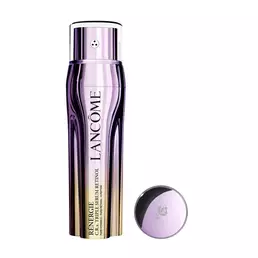


Rénergie C.R.x. Triple Serum Retinol
Reduce Visible Wrinkles & Firms


Rénergie H.C.F. Triple Serum
Plumping & Dark-Spot Reducing


Supra Screen Invisible Serum Sunscreen SPF 50+
Anti-Aging Correction & SPF 50+ Protection
For Sagging: Structure-Focused Ingredients
Addressing the appearance of sagging calls for skincare powered by performance-driven ingredients. Peptides are a popular choice in this space—often described as helping skin look more supported and resilient over time. Look for formulas with firming or lifting complexes that contain ingredients like PDRN, Copper Peptides, or L’Oréal’s proprietary Pro-Xylane to build an effective routine for visible signs of collagen loss.
Pro Tip: Incorporating application gestures into your routine, like a lifting facial massage, or Gua Sha, can help by "sculpting" the muscles under the skin, providing a temporary but visible lift to the jawline.
Lancome’s Skincare for Sagging


Rénergie Collagen+ Lift-Xtend Cream
Visibly Lift & Tighten


Rénergie H.P.N. 300-Peptide Cream
Reduce Sagging & Wrinkles
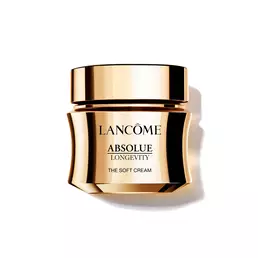


Texture vs. Architecture
Think about it like this: wrinkles are about the texture of the fabric, while sagging is about the structure of the mattress. You don't have to choose between addressing one or the other. Maybe you want a skincare routine for collagen loss that targets both wrinkles and sagging. Now that you can recognize your primary concern and know which ingredients to look for, you’re ready to achieve all your skin goals. You can’t stop the clock, but by utilizing a routine to address the visible signs of collagen loss today, you can maintain your youthful look for years to come.
Frequently Asked Collagen Loss Questions
References:
Brincat M, et al. "A study of the decrease of skin collagen content, skin thickness, and bone mass in the postmenopausal woman." Obstetrics & Gynecology. 1987;70(6):840-5.
Fisher GJ, et al. "Molecular mechanisms of photoaging and its prevention by retinoic acid." Archives of Dermatology. 1998;134(4):483-491.
Ganceviciene R, et al. "Skin anti-aging strategies." Dermato-Endocrinology. 2012;4(3):308-319.
Pinnell SR. "Regulation of collagen biosynthesis by ascorbic acid: a review." Yale Journal of Biology and Medicine. 1985;58(6):553–559.
Rohrich RJ, Pessa JE. "The Fat Compartments of the Face: Anatomy and Clinical Implications for Cosmetic Surgery." Plastic and Reconstructive Surgery. 2007;119(7):2219-2227.
Shuster S, Black MM, McVitie E. "The influence of age and sex on skin thickness, skin collagen and density." British Journal of Dermatology. 1975;93(6):639-643.
