



With each new year, you may notice some changes in your skin. Wrinkles on the face, like forehead wrinkles, crow’s feet and smile lines, rough skin texture, and discoloration may begin to emerge as the visible signs of aging.
To keep skin visibly radiant and firm throughout the aging process, learn about the impact of aging on skin and steps you can take to keep it looking as youthful as you feel.
What causes aging skin?
There are two ways skin ages: through intrinsic factors and extrinsic factors.
Intrinsic Factors
Intrinsic factors are found naturally throughout the body; these include your genetics, cellular metabolism, and hormones. Not surprisingly, you don’t have that much control over these.
Extrinsic Factors
Extrinsic factors behind aging skin, on the other hand, cover everything beyond your biology, such as UV exposure (photoaging), pollution, and toxins. We have relatively more control over these, depending on your daily environment and lifestyle.
How does aging impact skin?
Aging is a complex, multi-dimensional process that affects every layer of the skin, from the visible surface (epidermis) down to the structural foundations (dermis and hypodermis). As we age, the skin's biological functions naturally slow down, and environmental factors (the exposome) accelerate these changes.
1. Radiance and Texture
One of the early visible signs of aging is losing that lit-from-within glow.
- Dullness: As cell renewal slows down, dead skin cells accumulate on the surface (the stratum corneum). This creates a rougher texture that scatters light rather than reflecting it, leading to a dull appearance.
- Enlarged Pores: As the skin loses its structural elasticity, the walls of the pores begin to sag. This makes pores appear larger and more visible, especially on the cheeks and nose.
- Dryness and Roughness: With a decrease in natural oil production and a weakened skin barrier, the skin loses its smooth, supple feel and can become prone to dry, flaky patches.
2. Discoloration and Skin Tone
Skin tone evenness is a hallmark of youthful skin. Aging disrupts this uniformity in a few ways:
- Dark Spots (Solar Lentigines): Dark spots are a primary concern since they directly impact the perceived age of the skin.
- Sallowness: A yellowing of the skin tone, often caused by glycation (where sugar molecules bond to proteins like collagen). This makes the skin look tired and less vibrant.
- Redness and Micro-vessels: The thinning of the skin makes underlying capillaries more visible, leading to persistent visible redness or "spider veins," particularly around the nose.
3. The Evolution of Wrinkles
You might notice different types of visible lines with age, each addressed with different approaches:
- Fine Lines: Often caused by surface dehydration, these are shallow and can frequently be plumped back up with hydration, like serums and moisturizers.
- Dynamic Wrinkles: These appear with your facial expressions, commonly crow’s feet, frown lines, and glabellar lines (“11s”). Over time, because the skin loses its "memory" and elasticity, these lines can become Static Wrinkles; visible even when the face is at rest.
- Deep Furrows: These are the result of long-term structural breakdowns, such as the nasolabial folds (smile lines) or the marionette lines at the corners of the mouth.
4. Volume and Definition
In our youth, facial volume is concentrated in the cheekbones. As we age, the concentration of volume is pulled lower and facial structures appear less defined:
- Sagging (Ptosis): Gravity pulls weakened skin downward, leading to jowls and a less defined jawline.
- Hollowing: A loss of subcutaneous fat causes a sunken look in the temples and under the eyes (the tear trough).
- Thinning of the Lips: The vermilion border of the lips becomes less defined, and the lips lose their natural fullness and pout.
5. Hot Spots for Visible Aging
- Eye Contour: The skin here is the thinnest on the body. It shows aging first through hooding of the upper lid, expression lines, and crepiness (a texture like tissue paper).
- Neck and Décolleté: Often neglected, this area can lose elasticity, leading to "tech neck" lines and "turkey neck" sagging.
- Hands: An infamous age giveaway characterized by thinning skin that makes veins and tendons more prominent, along with accumulated sun damage.
How can you take care of aging skin?
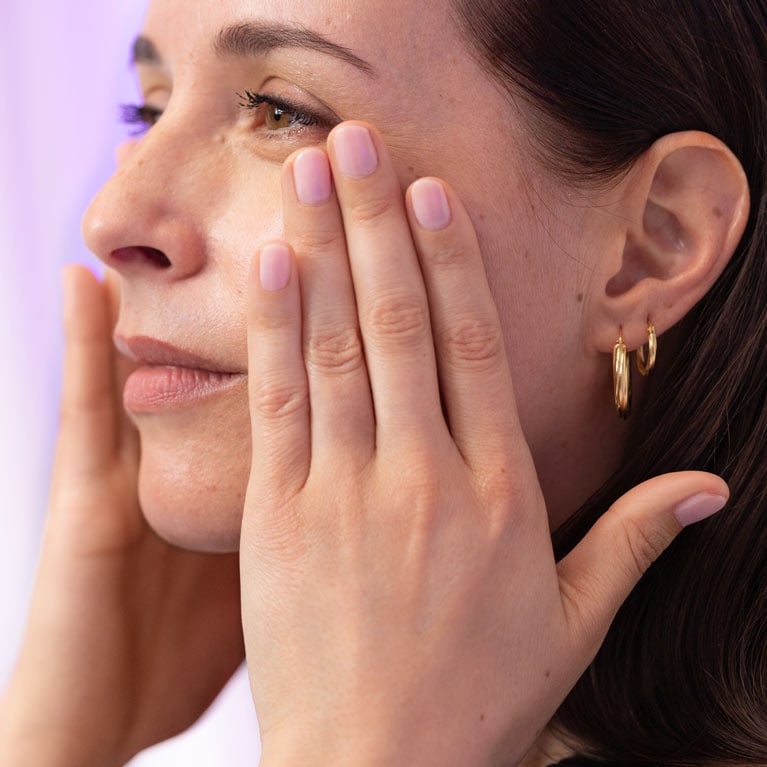
Taking care of aging skin is most effective with a dual approach: protection from further damage and correction of the existing signs, like visible wrinkles, loss of firmness, and dullness. Consider implementing these three strategies for an effective routine that can address the visible signs of aging:
The Golden Rule of Protection
Protection remains the most effective anti-aging strategy, regardless of your current age.
- Broad-Spectrum SPF 30+ (Every Day): Since 80% of aging is caused by the exposome (UV and pollution), sunscreen is the most important product you can own. Applying sun protection daily helps prevent photoaging and protects the results of your skincare.
- Antioxidants (Vitamin C): Apply a Vitamin C serum in the morning. It acts as an invisible shield against damaging free radicals from pollution and light, while also visibly brightening the complexion.
Incorporate Targeted Ingredients
To address the biological slowdown, look for these known powerhouse ingredients:
- Retinol (Vitamin A): The gold standard for anti-aging. Retinol is known to accelerate cell turnover and promote collagen production.
- Pro-Xylane: A L'Oréal-patented molecule that targets the skin's "ground substance" (Extracellular Matrix). It helps redensify the skin and strengthen the dermal-epidermal junction (DEJ) to address visible sagging.
- Peptides: Peptides act as the messengers for faster surface cell renewal, supporting collagen and elastin.
Focus on Hydration and Barrier Repair
As moisture production drops, the skin barrier weakens.
- Beta-Glucan: Triple threat for hydration, offering soothing benefits and intense hydration while promoting skin barrier repair.
- Hyaluronic Acid: Great for hydration. Hyaluronic acid is known to pull moisture into the skin to instantly plump fine lines.
- Ceramides and Fatty Acids: Look for barrier-repair moisturizers to replenish lipids the skin produces naturally. This helps prevent dryness and sensitivity common in dry skin types and mature skin.
Frequently Asked Aging Skin Questions
References:
Shuster S, Black MM, McVitie E. "The influence of age and sex on skin thickness, skin collagen and density." British Journal of Dermatology.
Randhawa M, et al. "Daily Use of a Facial Broad Spectrum Sunscreen Over One-Year Significantly Improves Clinical Evaluation of Photoaged Skin." Dermatologic Surgery.
Grimes, P. E. (2020). "The Skin Barrier: Structure, Function, and the Impact of Cleansers and Moisturizers." Journal of Clinical and Aesthetic Dermatology.
Brincat M, et al. "A study of the decrease of skin collagen content, skin thickness, and bone mass in the postmenopausal woman." Obstetrics & Gynecology.
British Journal of Dermatology: The influence of age and sex on skin thickness, skin collagen and density
Journal of Investigative Dermatology: Age-associated changes in human epidermal cell renewal
Journal of Dermatological Science: The skin aging exposome
Skin Cancer Foundation: Photoaging (UV-induced Aging)
